During the Covid-19 pandemic, many businesses relied on two lifelines at once: government support schemes and insurance claims for lost income.
That overlap is now at the centre of a dispute before the UK Supreme Court in Gatwick Investment Limited and others v Liberty Mutual Insurance Europe SE, which asks whether furlough payments should reduce business interruption insurance payouts.
People are paying attention again because the courts are being asked to clarify how overlapping support is treated. But the underlying process matters far beyond Covid, furlough, or this specific case — it affects how insurers assess losses whenever outside funding enters the picture.
What actually happens when a business claims insurance after receiving government support?
When a business makes an insurance claim for lost income, the insurer does not simply look at the headline loss figure. It examines what the business actually lost after accounting for money it did not ultimately have to pay out.
This usually begins with a claims submission that includes financial records, payroll data, and evidence of interruption. Insurers then review whether the policy allows deductions for costs saved or income replaced from other sources, which may include government schemes.
That assessment is not automatic. It depends on policy wording, the timing of payments, and how closely the support relates to the insured loss.
Why do these disputes take years to resolve?
Disputes often surface late in the claims process, sometimes after interim payments have already been made. Insurers typically revisit deductions only after final loss calculations are exchanged, which can be months after the interruption period ends.
At that stage, insurers may argue that certain losses were reduced by furlough or similar schemes and should be adjusted. If the parties disagree, the issue moves through correspondence, expert accounting reports, and sometimes court proceedings.
Each stage introduces delay because factual loss calculations and contractual interpretation are assessed separately. Appeals can follow, particularly where multiple claims depend on the same wording, extending resolution well beyond the original disruption.
Where do businesses commonly get stuck?
Many policyholders assume insurance pays “on top of” any government help. In practice, insurers frequently examine whether the policy requires deductions for costs avoided or replaced.
A common failure point is evidence. Businesses may struggle to show whether furlough payments replaced wages that would otherwise have formed part of an insured loss, or whether those wages would not have been paid at all during closure.
Another sticking point is classification — whether support is treated as income, a saving, or a separate benefit under the policy wording.
A realistic example of how this plays out
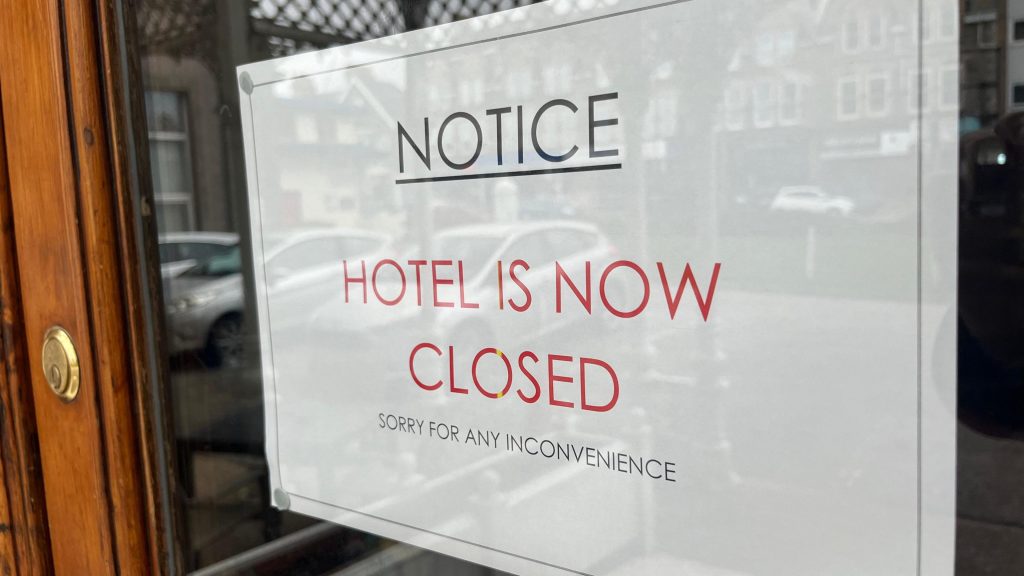
A hotel closes during a government-mandated lockdown and submits a business interruption claim covering lost revenue and staffing costs. Months later, it receives furlough payments covering part of its wage bill.
The insurer accepts the interruption but later argues that the wage element of the claim should be reduced because furlough covered those costs. The hotel disputes this, saying the policy was intended to cover losses regardless of state support.
The disagreement delays final settlement. While partial payments may be made, the disputed portion remains unresolved pending interpretation.
What people usually assume — and what actually happens
Many businesses assume that if a policy covers loss of income, outside assistance is irrelevant. In practice, insurers often assess the net loss after accounting for expenses avoided or reimbursed elsewhere.
What the system examines is not fairness or intent, but whether the policy wording permits adjustment and whether the support directly overlaps with the insured loss. That assessment is fact-specific and rarely quick.
How this is typically handled under existing law
Courts generally approach these disputes by interpreting the insurance contract rather than the purpose of the government scheme. The central question is whether savings or adjustment clauses apply to the payments received.
Responsibility is assessed through causation — whether the payment reduces the same loss the insurer would otherwise indemnify. Courts do not assume deduction or non-deduction automatically; they examine wording, timing, and financial evidence.
Outcomes can differ between similar businesses depending on how policies are drafted and how losses are calculated.
What happens next when courts are asked to decide?
When higher courts consider disputes like this, they do not calculate individual claims. Instead, they clarify how policies should be interpreted, which then filters back into ongoing negotiations and unresolved claims.
That guidance may resolve some disputes quickly, while others still require recalculation based on individual facts. The process clarifies the framework, not the final figures.
Receiving government support does not automatically reduce an insurance claim — but it does not automatically sit outside it either. The outcome depends on how losses are measured, how policies are written, and how closely payments overlap.
Understanding that process explains why these disputes persist long after the original disruption, and why resolution often takes far longer than businesses expect.