Can ICE Be Near Polling Sites? What the Law Allows — and What the White House Didn’t Explain
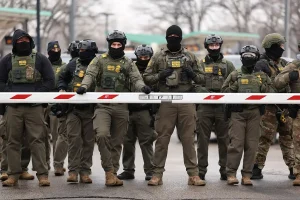
When the White House said it could not guarantee that Immigration and Customs Enforcement agents would not be near polling places during the 2026 midterm elections, the comment triggered widespread concern and a rush of near-identical headlines. Most coverage focused on what was said in the briefing. Far less attention was paid to how election-day enforcement authority actually works, and why the absence of a “formal plan” does not fully resolve the issue.
This article explains what the existing reporting leaves out.
What the White House Did — and Did Not — Say
At a February briefing, White House press secretary Karoline Leavitt said she had not heard Donald Trump discuss any “formal plans” to deploy ICE agents at polling sites. She also declined to guarantee that ICE agents would not be present near voting locations, describing the scenario as hypothetical while stopping short of ruling it out.
Those two statements are often treated as a single position. In practice, they are not. Saying there is no formal plan addresses presidential intent. Declining to give a guarantee reflects how federal enforcement authority already exists below that level.
Who Actually Controls ICE Deployment on Election Day
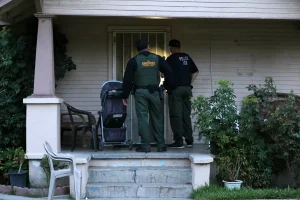
ICE does not operate through election-specific directives. It sits within the Department of Homeland Security, where national leadership sets priorities but regional field offices retain day-to-day discretion over enforcement activity. Unless restricted by policy guidance or court order, that authority continues to apply on Election Day.
This structure matters because it means the lack of a White House directive does not automatically prevent ICE agents from being present in a given area. “No formal plan” does not mean “no possible presence.” It means no new instruction has been issued from the top.
What Federal Law Prohibits — and What It Doesn’t
Federal law draws a firm line between military forces and civilian law enforcement during elections. The president is barred from deploying military troops at polling places. ICE agents, however, are civilian law enforcement and are not covered by that prohibition.
There is no statute that categorically bans ICE agents from being near polling locations. The legal risk arises when enforcement activity interferes with voting, intimidates voters, or obstructs access. In those cases, civil rights and election-protection laws can come into play. Presence alone is not automatically illegal; conduct is what determines legality.
Why “Near a Polling Site” Is a Critical Distinction
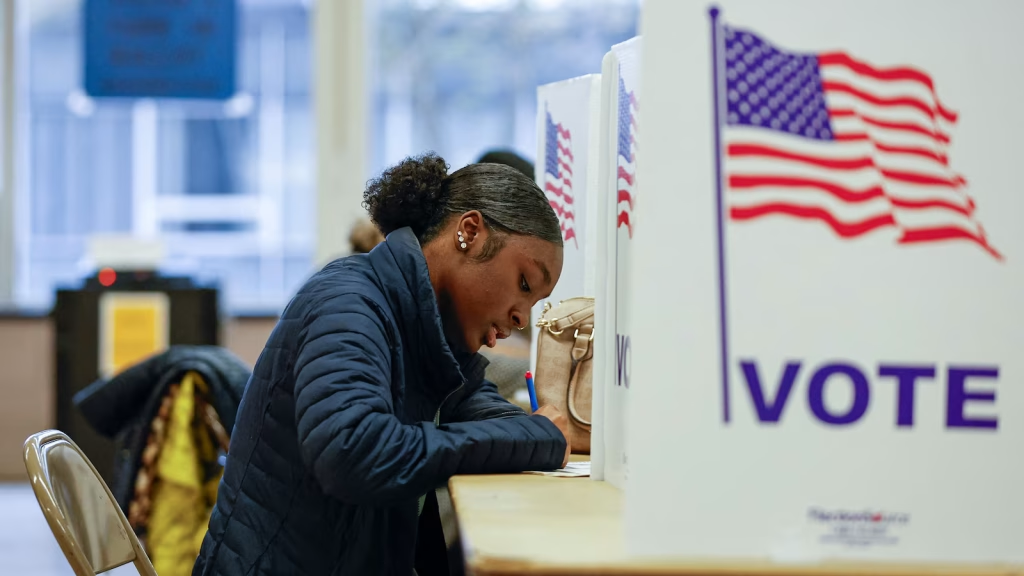
Most headlines collapse “at the polls” and “around polling sites” into the same idea. Legally, they are different. Polling places are often located in schools, churches, or municipal buildings where law enforcement may already be present for unrelated reasons.
Concerns escalate when enforcement activity appears targeted, visible, or timed in a way that discourages voting. That ambiguity is central to the issue. It is also why election officials focus less on formal deployment announcements and more on how authority is exercised in practice.
What Has Happened in Past Elections
Historically, federal agencies have avoided visible enforcement activity near polling places on Election Day. That restraint has often relied on internal guidance and political norms rather than explicit statutory bans.
Because those norms are not always codified, they can change without new legislation. Past avoidance does not create a permanent legal barrier, but it does explain why even the suggestion of enforcement presence near polls attracts scrutiny.
What States Can Do If Federal Agents Appear Near Polls
States administer elections, but they do not command federal agents. If enforcement activity interferes with voting, states can seek emergency court orders or pursue civil rights claims. They can also enforce state laws against intimidation or obstruction.
What states cannot do is directly order federal agents to leave polling areas. Any restriction on federal activity typically requires judicial involvement, which is why disputes involving Election Day enforcement often move quickly into court.
What Would Change Between Now and November
Several developments would materially alter the legal landscape. Formal guidance from the Department of Homeland Security or the Department of Justice restricting enforcement near polling places would clarify boundaries. Court rulings addressing pre-election enforcement actions could do the same. Executive orders or litigation expanding federal authority would move the issue in the opposite direction.
Until then, the situation remains unresolved not because a plan exists, but because enforcement authority already does.
The Bottom Line
The current reporting accurately reflects what the White House said. What it largely omits is how federal enforcement authority operates in practice, and why the absence of a “formal plan” does not fully settle the question.
The real issue is not whether ICE has been ordered to appear at polling sites. It is whether existing powers will be clarified, constrained, or tested as Election Day approaches. That question remains open.