
Inside the Louvre Crown Heist: Damage, Value, and the True Cost
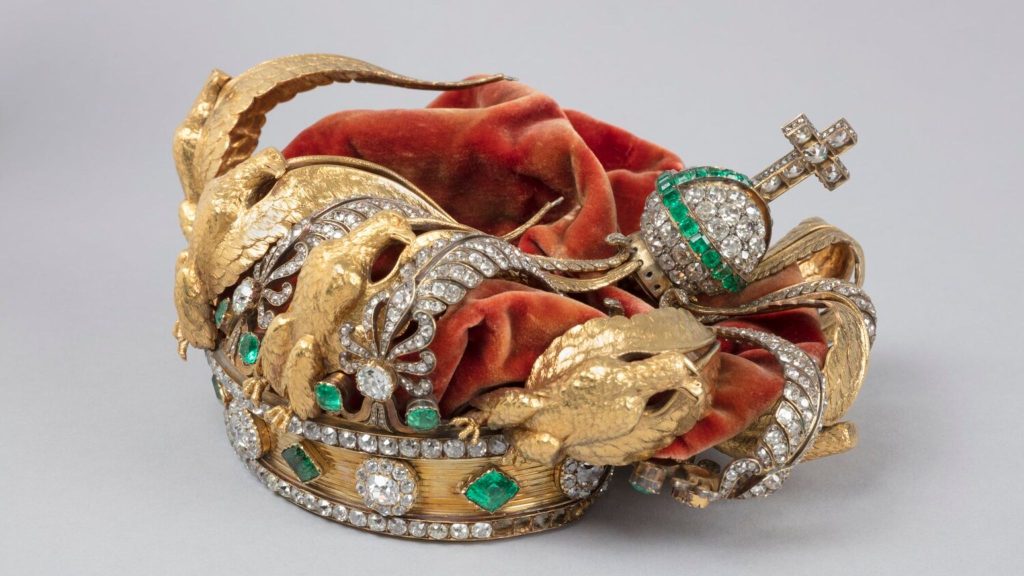
The crushed crown of French Empress Eugénie, abandoned by thieves during last October’s audacious Louvre heist, has now been confirmed as largely intact and fully restorable.
The 19th-century gold diadem retains all 56 of its emeralds and all but 10 of its 1,354 diamonds, though one of the eight golden eagles that once circled the crown remains missing.
Museum officials say the damage — caused when the crown was forced through a narrow opening in its display case and dropped during the escape — can be repaired without reconstruction under the supervision of specialist conservators at the Louvre Museum.
While photographs of the damaged crown have focused attention on what survived, the more consequential questions now concern money, accountability, and what happens next — not only for the crown itself, but for the jewels still missing and the institution charged with protecting them.
The Crown’s Value and What “Priceless” Really Means
As a unique historical artefact, the Eugénie crown does not have a conventional market price. Its cultural and historical significance places it beyond sale, yet it still carries a substantial financial valuation for insurance and state accounting purposes. The broader haul stolen in the heist was valued at approximately €88 million, placing the crown among the most valuable individual objects in France’s national collections.
That distinction matters once damage occurs. While cultural value cannot be replaced, financial value is used to determine insurance exposure, restoration funding, and long-term risk assessments. In practical terms, the crown’s materials alone — gold, emeralds, and diamonds — represent millions of euros, even before accounting for craftsmanship and provenance.
Restoration Costs and Who Pays the Bill
Early estimates suggest the physical restoration of the crown will cost in the region of €40,000 to €50,000. The relatively modest figure reflects the fact that most of the original materials remain intact, allowing conservators to focus on reshaping distorted gold, reattaching elements, and stabilising settings rather than replacing lost components.
That visible repair cost, however, is only a fraction of the overall financial impact. As a state-owned museum, the Louvre operates within the French public funding system, meaning restoration expenses are typically shared between museum budgets, state cultural funding, and insurance coverage. Where a security failure is involved, insurance arrangements can become more complex, and premiums often rise significantly following a high-profile theft.
Beyond the crown itself, the heist has triggered additional costs that are rarely itemised publicly. Emergency security upgrades, forensic investigations, prolonged gallery closures, and lost visitor revenue all contribute to a long-term financial burden. In many cases, these indirect costs exceed the price of restoring the damaged object itself.
The Fate of the Missing Jewels
Seven other historic jewels stolen during the raid, including a diamond tiara and multiple necklaces, remain unaccounted for. Recovery becomes more difficult as time passes, particularly for objects that are globally recognisable.
Such jewels cannot realistically be sold intact. Instead, their value lies in dismantling. Diamonds can be removed and recut, emeralds reset, and precious metals melted down. Once separated, these materials lose their identity, making tracing or recovery increasingly unlikely. Even if fragments resurface years later, reassembling them into their original form is almost impossible.
How the Heist Was Possible
The theft exposed vulnerabilities inherent in protecting priceless objects inside historic buildings designed long before modern security threats.
The thieves exploited access points, timing, and infrastructure rather than relying on prolonged force. A stolen mechanical lift provided balcony access, power tools breached reinforced display cases, and guards were neutralised quickly enough to allow escape within minutes.
Although security reviews were ordered after the heist, the extent of permanent changes has not been fully detailed publicly. Retrofitting centuries-old architecture while preserving public access and heritage protections is expensive and complex, and those constraints continue to shape museum security worldwide.
A Repaired Crown, an Ongoing Cost
When Empress Eugénie’s crown returns to public display, it will likely appear much as it did before the heist. The gold will be reshaped, the gems secured, and the visible damage erased.
What will not be visible is the true cost of the failure that allowed a national treasure to be dropped on a Paris pavement. That cost extends beyond restoration, embedded in higher insurance premiums, upgraded security systems, and public funding decisions that will shape how irreplaceable heritage is protected in the years ahead.
The crown can be repaired. The bill — financial, institutional, and reputational — is still being paid.