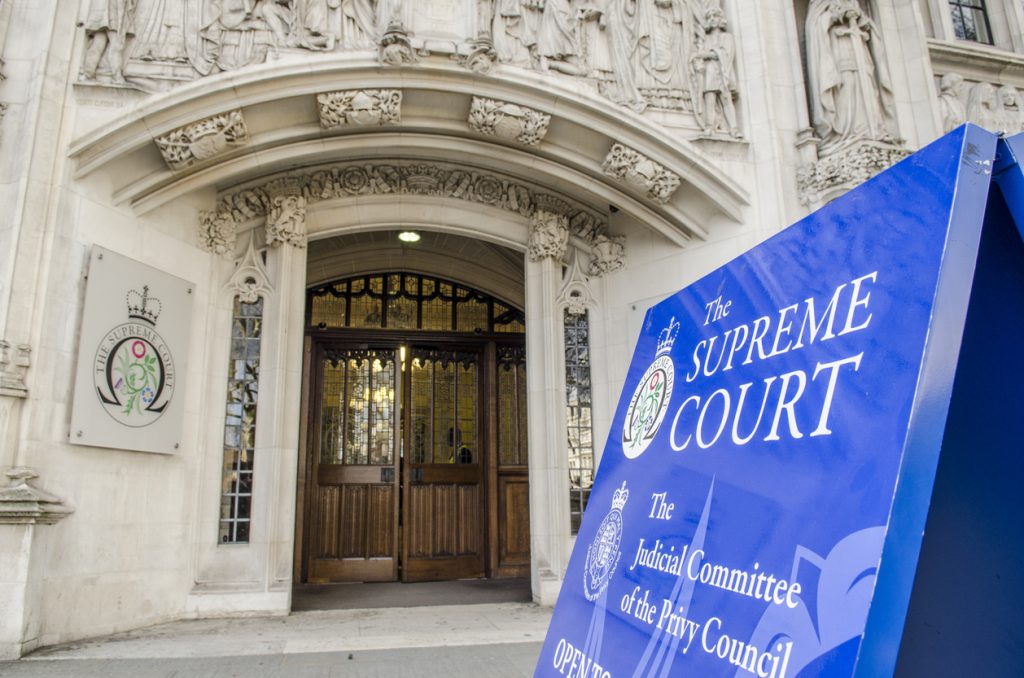
The UK Supreme Court will examine whether English courts can set global FRAND licence terms in a closely watched dispute between Tesla, Inc. and InterDigital Patent Holdings, Inc. after granting permission to appeal in January 2026.
The case centres on Tesla’s challenge to a non-negotiable $32-per-vehicle royalty under the Avanci patent pool for connected cars.
A full hearing is scheduled for 27–29 April 2026. The appeal tests the jurisdictional reach of UK courts in standard-essential patent (SEP) licensing — an issue with direct implications for automotive manufacturers, telecom licensors and platform-based royalty models. The outcome could influence where global FRAND disputes are litigated and how much leverage implementers can exert.
The Dispute in Brief
The proceedings arise from InterDigital’s licensing of patents declared essential to ETSI 2G through 5G standards. Those patents are bundled in the Avanci 5G Platform, which aggregates licences for connected-vehicle use.
Tesla plans to deploy 5G-enabled vehicles in the UK, its fourth-largest global market. It disputes the platform’s flat-rate structure, arguing the terms are not fair, reasonable and non-discriminatory (FRAND). In December 2023, Tesla sought declarations concerning patent validity and the appropriate FRAND terms covering approximately 11,900 UK SEPs.
InterDigital challenged the English courts’ jurisdiction. The High Court set aside service in part, and the Court of Appeal dismissed Tesla’s appeal by majority in March 2025, with Arnold LJ dissenting on aspects of the jurisdictional analysis. Tesla now appeals to the Supreme Court, while InterDigital pursues a cross-appeal.
What the Court Decided
The UK Supreme Court has not yet issued a substantive ruling. On 21 January 2026, the Court granted permission to appeal, confirming a three-day hearing for late April.
The Court is expected to consider whether English judges can determine FRAND terms at an implementer’s request when an intermediary offers the licence. It will also examine how civil procedure rules on international service and forum apply in SEP licensing disputes involving patent pools.
How the Court Got There
To date, the litigation has focused on jurisdiction rather than the appropriate FRAND rate. Tesla has positioned England as a suitable forum for determining licensing conditions applicable to UK SEPs.
InterDigital successfully argued at earlier stages that the dispute was not properly anchored in England. The Court of Appeal majority upheld the High Court’s approach to service and jurisdiction, concluding that Tesla’s claims, as framed, could not proceed in England. The court nevertheless recognised the case arises in a rapidly developing area of FRAND jurisprudence.
The commercial context is significant. Tesla requires licences to sell 5G-enabled vehicles in the UK — its fourth-largest global market — while the Avanci platform aggregates roughly 11,900 UK SEPs offered at a flat per-vehicle rate. Where implementers challenge standardised pool pricing as non-FRAND, the choice of forum can materially affect royalty exposure and negotiation dynamics.
The Supreme Court’s decision to hear the appeal indicates that the jurisdictional boundaries of English courts in global SEP disputes remain unsettled.
Key Takeaways for Business
-
Forum strategy remains in focus: The appeal will test how far English courts can reach into global SEP licensing disputes, a key consideration for multinational technology and automotive groups.
-
Patent pool pricing faces scrutiny: Tesla’s challenge to the $32-per-vehicle licence reflects increasing implementer resistance to rigid pool royalty structures.
-
Connected-vehicle economics are exposed: With thousands of UK SEPs tied to automotive connectivity, the eventual ruling could influence future cost considerations across the sector.
-
Negotiation leverage may evolve: If implementers can seek FRAND determinations in England, licensors may face greater pressure in cross-border licensing discussions.
-
April hearing is a key watch point: The Supreme Court’s judgment is likely to provide important guidance for SEP litigation strategy.
What Happens Next
The Supreme Court hearing is scheduled to conclude on 29 April 2026. A written judgment will follow in due course. If the Court finds jurisdiction in England, the dispute is expected to return to the Patents Court for further proceedings on the licensing issues.
Case Details
Court: UK Supreme Court
Date: Permission granted 21 January 2026
Case name: Tesla, Inc and others v InterDigital Patent Holdings, Inc and another (No 2)
Docket number: UKSC/2025/0058/A
Area of law: Intellectual property / standard-essential patents
Result: Permission to appeal granted; hearing pending