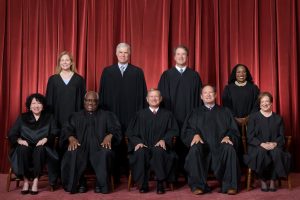
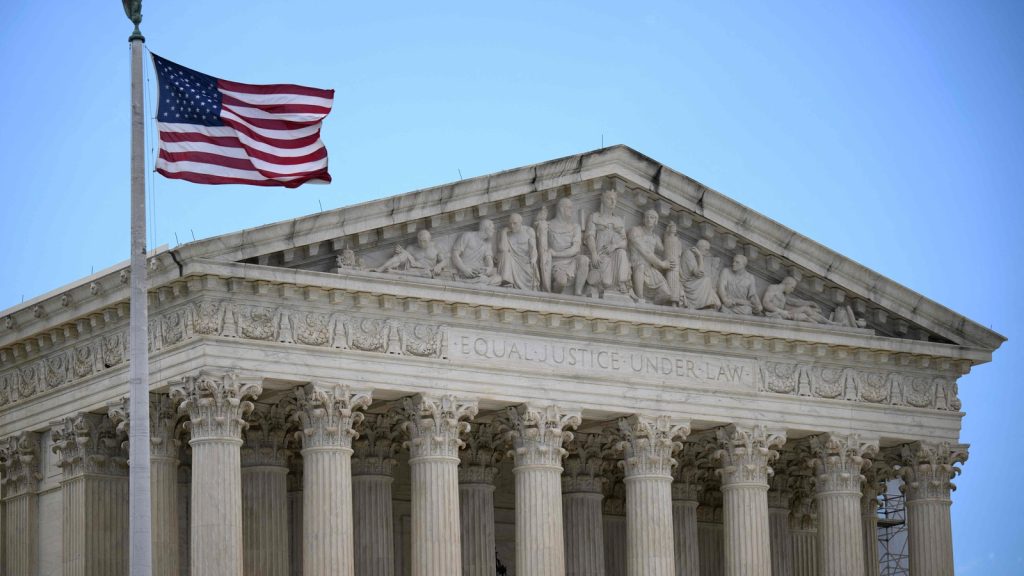
The U.S. Supreme Court on February 25, 2026, held that federal contractors cannot immediately appeal a district court’s refusal to apply the Yearsley doctrine, clarifying that the doctrine provides a defense to liability—not immunity from suit. The decision in GEO Group, Inc. v. Menocal et al. affirms limits on interlocutory appeals under federal law.
The case arose from a class action challenging detainee work policies at a privately operated immigration detention facility in Colorado. GEO Group sought early dismissal, arguing it was shielded because the government had authorized the challenged conduct.
For companies operating under federal contracts, the ruling has immediate litigation consequences: losing a Yearsley motion will usually mean continuing through trial-level proceedings before obtaining appellate review.
The dispute in brief
GEO Group operates a private detention facility in Aurora, Colorado, under contract with U.S. Immigration and Customs Enforcement (ICE). Respondent Alejandro Menocal, a former detainee, filed a class action on behalf of detainees challenging two GEO work policies.
According to the opinion, GEO required detainees to perform unpaid cleaning of common areas under a “Sanitation Policy,” with escalating sanctions—including up to 72 hours of solitary confinement—for noncompliance. GEO also ran a “Voluntary Work Program” paying detainees $1 per day for additional tasks such as food preparation and laundry.
Menocal alleged the sanitation policy violated a federal prohibition on forced labor and that the voluntary work program resulted in unjust enrichment under Colorado law.
After discovery, GEO moved for summary judgment, invoking the Supreme Court’s 1940 decision in Yearsley v. W. A. Ross Construction Co. GEO argued ICE had “authorized and directed” the challenged policies and that the case should therefore be dismissed.
The district court disagreed, finding the government contract did not require GEO to implement the specific work rules and concluding GEO had “independently develop[ed] and implement[ed]” them. The court held Yearsley did not bar the suit and that a trial was necessary.
GEO sought an immediate appeal. The Tenth Circuit dismissed for lack of jurisdiction, and the Supreme Court granted review.
What the court decided
The Supreme Court affirmed the Tenth Circuit’s dismissal and held that a pretrial order denying Yearsley protection is not immediately appealable under 28 U.S.C. §1291.
Writing for the Court, Justice Kagan explained that Yearsley provides a potential defense to liability, not an immunity from suit. Because merits defenses can be reviewed after final judgment, the denial of Yearsley protection is not “effectively unreviewable” later and therefore does not qualify for interlocutory review under the collateral-order doctrine derived from Cohen v. Beneficial Industrial Loan Corp.
The case was affirmed and remanded for further proceedings.
How the court got there
The Court’s analysis focused on the scope of federal appellate jurisdiction under §1291, which generally permits appeals only from “final decisions” of district courts. While the collateral-order doctrine allows a narrow category of interlocutory appeals, the Court emphasized that the doctrine remains “narrow,” “stringent,” and of “modest scope.”
The key question was whether Yearsley confers immunity from suit—which can justify immediate appeal—or merely a defense to liability, which typically cannot.
Defense vs. immunity
The Court drew a sharp distinction between:
-
Merits defenses, which argue the defendant acted lawfully and should not be held liable, and
-
Immunities, which provide an entitlement not to stand trial at all.
Immunity, the Court explained, protects against the burdens of litigation itself and is effectively lost if a case proceeds to trial. By contrast, a merits defense can be fully vindicated after trial through appellate reversal.
Reading Yearsley
Looking to the 1940 Yearsley decision, the Court concluded the doctrine operates as a liability defense. Under Yearsley, a contractor avoids liability only when:
-
the government’s authorization was valid, and
-
the contractor stayed within the scope of that authority.
Because the protection disappears if the contractor exceeded its authority or acted under invalid authorization, the Court said the doctrine turns on the lawfulness of the contractor’s conduct—hallmarks of a merits defense.
The opinion also stressed that sovereign immunity generally does not transfer to government agents or contractors merely because they perform government work. GEO’s characterization of Yearsley as “derivative sovereign immunity,” the Court said, conflicted with that line of precedent.
Collateral-order doctrine application
Once Yearsley was classified as a merits defense, the jurisdictional outcome followed. A denial of the defense can be reviewed after final judgment and therefore is not “effectively unreviewable” later—the third requirement under Cohen.
The Court noted that interlocutory review may still be available in some cases through the separate certification process under 28 U.S.C. §1292(b), but the district court had not certified an appeal here.
Separate opinions
Justice Thomas concurred in part and in the judgment, agreeing Yearsley is a defense but questioning reliance on the collateral-order doctrine more broadly. Justice Alito concurred in the judgment, agreeing immediate appeal was unavailable but cautioning that whether a defense turns on legality is not always dispositive in immunity analysis.
Key takeaways for business
-
Failed Yearsley motions will usually not stop litigation early. Contractors denied Yearsley protection must typically proceed through trial-level proceedings before appealing.
-
Contract scope and documentation are critical. The district court’s finding that GEO independently implemented the policies shows how contractual language and operational control can determine Yearsley exposure.
-
Do not rely on “derivative sovereign immunity” framing. The Court squarely rejected treating Yearsley as transferable sovereign immunity.
-
Budget and strategy planning should reflect longer litigation timelines. Without automatic interlocutory review, contractors may face extended discovery and trial risk.
-
Section 1292(b) remains a limited safety valve. Immediate review may still be possible if a district court certifies the issue and the appellate court agrees.
What happens next
The Supreme Court affirmed the Tenth Circuit and remanded the case for further proceedings. GEO may raise its Yearsley defense on appeal after final judgment if liability is ultimately imposed. The opinion also notes that interlocutory review could occur in other cases through §1292(b) certification, though that did not happen here.
Case details
-
Court: Supreme Court of the United States
-
Date: February 25, 2026
-
Case name: GEO Group, Inc. v. Menocal et al.
-
Docket number: No. 24–758
-
Area of law: Appellate jurisdiction / government contractor liability
-
Result: Affirmed and remanded; denial of Yearsley protection is not immediately appealable
People Also Ask
What is the Yearsley doctrine?
The Yearsley doctrine protects federal contractors from liability when they act pursuant to valid government authorization and within the scope of that authority. If either condition is missing, the protection does not apply.
Why couldn’t GEO immediately appeal?
The Court ruled Yearsley is a merits defense rather than an immunity from suit. Because the issue can be reviewed after final judgment, it does not qualify for interlocutory appeal under federal law.
Did the Supreme Court decide whether GEO violated forced labor laws?
No. The Court addressed only whether the denial of Yearsley protection could be immediately appealed. The underlying claims remain for further proceedings.
What is the collateral-order doctrine?
It is a narrow exception to the final-judgment rule that permits immediate appeal of certain non-final orders. The Court held the denial of Yearsley protection does not meet that standard.
Can contractors ever get early review of Yearsley issues?
The opinion notes that interlocutory review may be available through the discretionary certification process under 28 U.S.C. §1292(b). That path was not used in this case.