Understand Your Rights. Solve Your Legal Problems

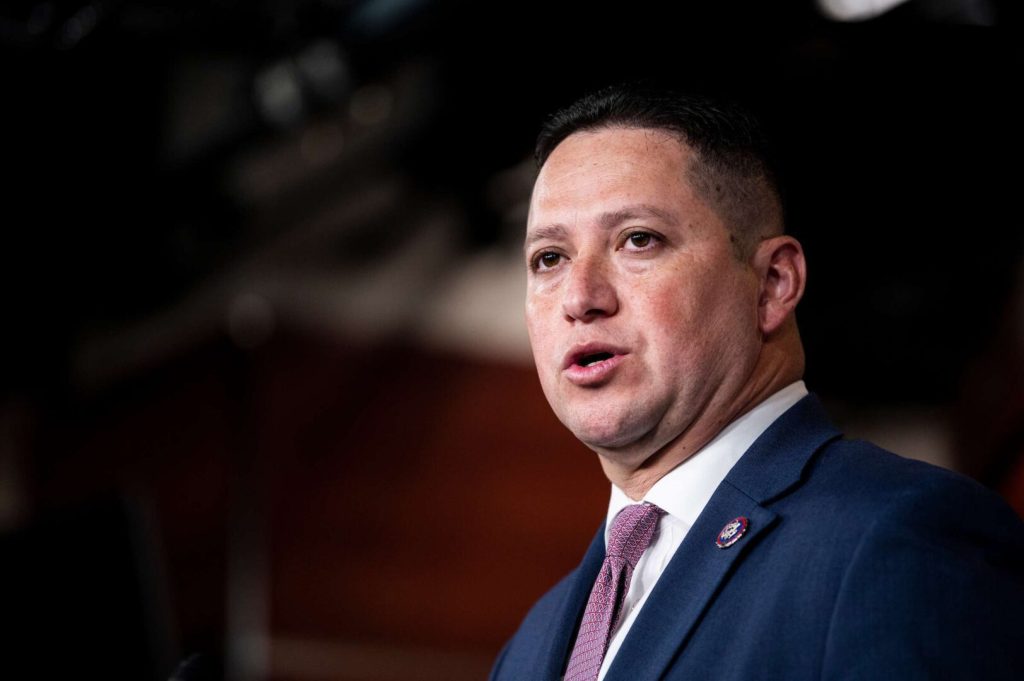
Allegations that U.S. Rep. Tony Gonzales exchanged sexually suggestive messages with a former congressional aide have emerged as a defining issue in a closely watched Texas Republican primary runoff, while also raising broader legal questions about workplace relationships and power dynamics between senior officials and staff.
The controversy emerged during the 2026 Republican primary for Texas’s 23rd congressional district, where Gonzales failed to secure the majority needed to win outright and will now face challenger Brandon Herrera in a runoff election scheduled for May 26.
The race was overshadowed in its final weeks by reports alleging Gonzales exchanged personal messages with a former staff member, Regina Santos‑Aviles, who later died in 2025 after setting herself on fire. Gonzales has denied wrongdoing and has said the information released publicly does not represent the full context of the situation.
Allegations about a relationship between Gonzales and Santos-Aviles had circulated for months but gained renewed attention in February 2026 as reported messages between the two became public.
Text messages cited in reports allegedly showed Gonzales asking Santos-Aviles for personal photographs and making sexually suggestive remarks. In one exchange, Santos-Aviles responded that the messages were “going too far.”
Santos-Aviles died more than a year after the reported exchanges. Police records indicate she set herself on fire at her home. Authorities have not linked her death to the alleged communications.
The controversy prompted calls from several Republican lawmakers for Gonzales to resign. Gonzales rejected those calls, telling CNN in February that the information released publicly does not represent the full context and stating he would not step down from office.
Gonzales has also denied the allegations and claimed he is the target of an extortion attempt. He posted part of a letter from the widower’s attorney referencing a potential settlement with a nondisclosure agreement, which the attorney said was a standard legal settlement proposal rather than blackmail.
Despite the controversy, House Republican leadership has not withdrawn its support and has largely left the outcome to voters.
The allegations have drawn attention to a common legal and compliance issue: relationships between supervisors and subordinates in professional environments.
Employment lawyers frequently highlight the risks associated with workplace relationships involving a power imbalance. When a senior official communicates with a subordinate in a personal or sexualised manner, it can raise questions about consent, pressure, or potential misuse of authority.
Many organisations, including government bodies, corporations, and law firms maintain strict policies requiring disclosure of workplace relationships or prohibiting relationships between managers and direct reports altogether.
These policies are designed to mitigate risks such as:
sexual harassment claims
allegations of coercion or retaliation
hostile work environment complaints
conflicts of interest affecting workplace decisions
Even when a relationship is consensual, the presence of a supervisory hierarchy can create legal exposure if a subordinate later alleges pressure or unfair treatment.
Members of Congress are subject to ethical rules governing their conduct toward congressional staff, including obligations to maintain a professional workplace and comply with federal protections against harassment and discrimination.
While congressional rules do not explicitly prohibit all relationships between lawmakers and employees, they do prohibit sexual harassment and require members to maintain professional boundaries with staff.
Allegations involving workplace behaviour may be reviewed through internal processes within the House of Representatives, including oversight by the United States House Committee on Ethics or through mechanisms administered by the Office of Congressional Workplace Rights.
Legal analysts often note that conduct within congressional offices is subject not only to internal ethics oversight but also to broader federal workplace protections that apply to employees working within the legislative branch.
The controversy emerged during a closely watched Republican primary contest in Texas’s 23rd congressional district, where Gonzales ultimately failed to secure the majority required to avoid a runoff election.
Gonzales, who has represented the border district since 2021, has faced criticism from both conservative and moderate factions during his tenure.
In 2023, the Texas Republican Party formally censured him after he supported bipartisan gun safety legislation passed following the 2022 school shooting in Uvalde.
His challenger, Brandon Herrera, a firearms entrepreneur and online commentator known as “The AK Guy,” has used his large social media following to build a competitive campaign and raise significant funding.
Neither candidate secured more than 50 percent of the vote in the primary, forcing a runoff election scheduled for May.
Beyond its political implications, the situation highlights governance and workplace conduct issues that extend far beyond government offices.
Employment lawyers often note that workplace relationships involving supervisors and subordinates can create legal and compliance risks because of the inherent power imbalance.
For this reason, many organisations require disclosure of such relationships, restrict relationships involving direct reporting lines, or prohibit them entirely.
Corporate leaders, compliance officers and legal teams often view cases like this as a reminder that workplace conduct policies are designed not only to protect employees but also to reduce potential legal liability and reputational risk.
Even allegations alone, particularly when they involve authority figures and junior staff, can lead to internal investigations, governance reviews and intense public attention.