Understand Your Rights. Solve Your Legal Problems

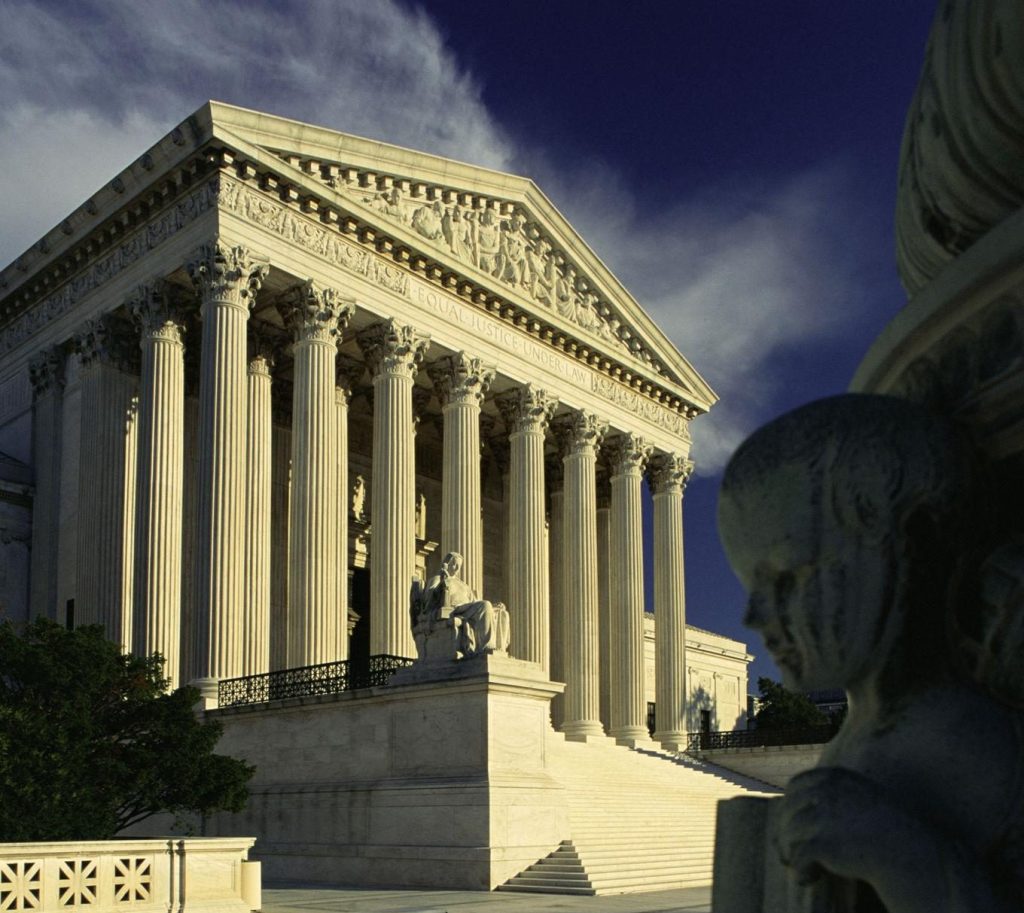
The US Supreme Court has partially lifted a Ninth Circuit stay in Mirabelli v. Bonta, allowing a district court injunction to remain in effect for certain parent plaintiffs challenging California school gender-identity policies.
In a per curiam order issued March 2, 2026, the Court vacated the appellate stay as to the parents while otherwise denying relief, according to the Supreme Court’s order.
The ruling does not finally resolve the dispute but materially reshapes the litigation posture as the appeal proceeds.
For education authorities, government counsel and compliance teams, the decision underscores rising constitutional exposure around student privacy and parental notification frameworks, particularly where policies operate at statewide scale.
The litigation began in 2023 when teachers in the Escondido Union School District sought relief from policies governing how schools handle student gender identity.
Parents later joined the action, alleging that California policies prevented schools from informing parents when their children engaged in gender-related social transition at school without student consent.
Plaintiffs asserted violations of the Free Exercise Clause and the Fourteenth Amendment’s Due Process Clause.
The US District Court for the Southern District of California certified statewide parent and teacher classes and entered a permanent injunction in December 2025.
The injunction barred state officials from implementing or enforcing provisions that would permit or require school employees to mislead parents about a child’s gender presentation and directed notice language in educator training materials recognising parental rights.
California officials appealed and sought emergency relief. The Ninth Circuit granted a stay pending appeal, concluding the State had shown a substantial case for relief and raising serious concerns about the breadth and legal foundation of the injunction.
Parents and teachers then asked the Supreme Court to vacate that stay.
The Supreme Court granted the application in part, vacating the Ninth Circuit’s stay as to the parent plaintiffs while otherwise denying relief.
In practical terms:
The district court injunction remains operative for the parent subclasses during the appeal.
The Ninth Circuit stay remains in effect in all other respects.
The ruling is interim and does not resolve the merits.
The underlying appeal will continue in the Ninth Circuit.
Applying the traditional stay factors, the Supreme Court concluded that parents seeking religious exemptions are likely to prevail on their Free Exercise claim.
The Court reasoned the policies substantially interfere with the right of parents to guide the religious development of their children.
The Court also indicated the parents’ substantive due process claims are likely to succeed, citing precedent recognising parental authority over the upbringing and mental-health decisions of children.
It further held that the alleged loss of constitutional rights during appellate proceedings constitutes irreparable harm and that the equities favour maintaining the injunction for the parent subclasses.
The Supreme Court’s intervention came against a sharply different preliminary assessment by the Ninth Circuit.
The appellate panel granted the State’s motion for a stay pending appeal after finding a substantial case for relief on the merits. The panel identified several areas of concern that remain central to the ongoing appeal.
Class certification and scope. The panel expressed serious reservations about the district court’s certification of a class covering every parent of California’s public school students and every public school employee in the state. It warned the court may not have conducted the “rigorous analysis” required under Rule 23.
Standing concerns. The panel noted that courts have routinely rejected similar parental challenges for lack of standing and emphasised that Article III does not permit relief for uninjured plaintiffs.
Uncertain policy premise. The Ninth Circuit questioned whether California law actually imposed the categorical nondisclosure rule assumed by the district court, pointing to guidance allowing disclosure where necessary to protect student wellbeing.
Substantive due process skepticism. The panel stressed the Supreme Court’s caution against expanding substantive due process and suggested the district court likely erred in its analysis.
Free Exercise analysis. The panel also warned that the district court may have overextended Mahmoud v. Taylor, describing that precedent as potentially limited to uniquely coercive curricular contexts.
Based on these concerns, the Ninth Circuit concluded the equitable factors — including public interest and potential governmental harm — favoured a stay.
For legal teams, the key takeaway is the emerging judicial divide:
The Ninth Circuit sees substantial vulnerability in the district court’s sweeping injunction.
The Supreme Court, at least at the interim stage, views the parents’ constitutional claims as sufficiently strong to justify partial relief.
That tension will shape the next phase of the litigation.
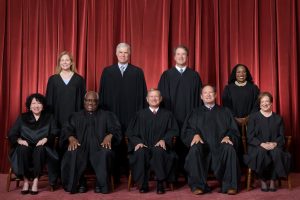
Justice Barrett, joined by the Chief Justice and Justice Kavanaugh, concurred, emphasising that existing parental-rights precedent supports the parents’ likelihood of success while stressing the Court’s ruling is preliminary.
Justice Kagan, joined by Justice Jackson, dissented, criticising the Court’s use of the emergency docket and warning the intervention risks being read as a conclusive merits determination.
The dissent also highlighted the legal complexity surrounding substantive due process in this context.
These divisions signal continuing doctrinal uncertainty in parental-rights litigation involving school policies.
Statewide education policies face heightened constitutional scrutiny. Broad nondisclosure frameworks may attract Free Exercise and due process challenges.
Classwide injunction risk remains a live battleground. The Ninth Circuit’s Rule 23 concerns highlight exposure where relief is framed on a statewide basis.
Policy clarity matters. Courts are closely examining whether school guidance truly mandates nondisclosure or allows discretion in safeguarding student welfare.
Emergency appellate intervention is increasing. Litigants in high-stakes constitutional disputes are likely to continue seeking Supreme Court relief at interim stages.
Public-sector compliance reviews are advisable. Education authorities and government counsel should reassess parental notification and training policies in light of the evolving split.
The Ninth Circuit will continue to consider the State’s appeal of the district court’s permanent injunction. In the meantime, the injunction remains operative for the certified parent subclasses following the Supreme Court’s partial vacatur of the appellate stay.
Further briefing and appellate review will determine whether the injunction is ultimately affirmed, narrowed or set aside.
The Supreme Court’s order does not resolve the underlying constitutional claims. No final determination on the merits has yet been issued.
Court: Supreme Court of the United States
Date: March 2, 2026
Case name: Mirabelli v. Bonta
Docket number: No. 25A810
Area of law: Constitutional law / appellate procedure
Result: Stay vacated in part as to parents; otherwise denied