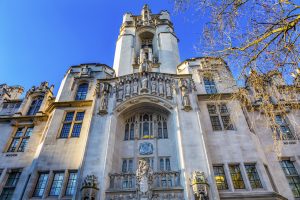
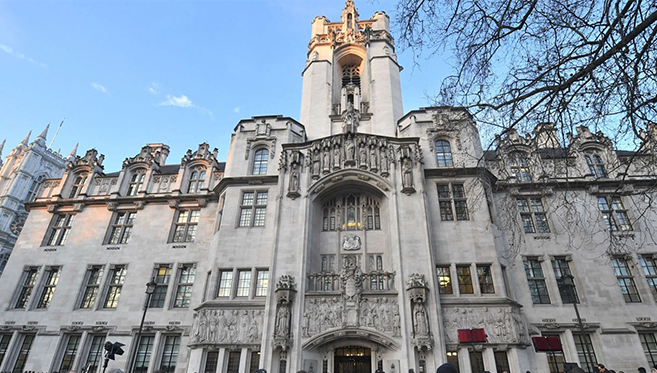
The Supreme Court of the United Kingdom has granted HM Revenue and Customs permission to appeal in HMRC v Evonik UK Holdings Ltd, a dispute over whether interest should be payable after money was paid under a court order that was later set aside.
The case arises within the long-running Franked Investment Income (FII) group litigation, which concerns the compatibility of parts of the UK corporate tax regime with European Union law and the repayment of tax paid under a mistaken understanding of that regime.
The Supreme Court has not yet ruled on the merits. Its decision to hear the appeal means the Court will examine a narrow but commercially significant procedural issue: whether a party that paid money under a court order later overturned can recover interest for the period during which the funds were held.
Background to the Dispute
The appeal stems from proceedings linked to the Franked Investment Income Group Litigation Order (FII GLO), a complex set of cases addressing whether aspects of the UK tax regime governing overseas dividends complied with European Union law.
According to the case summary, Evonik UK Holdings Limited acted as a test claimant within the group litigation. The claimants successfully argued that they had paid certain taxes under the mistaken belief that the UK tax rules applicable to overseas dividends complied with EU treaty provisions.
As a result, the company became entitled, in principle, to recover amounts paid to HMRC under that mistake of law. The relevant tax sums had been repaid by March 2014.
The dispute that now reaches the Supreme Court concerns the treatment of interest associated with those payments.
In January 2016, Mr Justice Henderson granted summary judgment in favour of Evonik in relation to compound interest for the period between the payment of advance corporation tax (ACT) and the date the tax was repaid.
The judge relied on the House of Lords authority Sempra Metals Ltd v Inland Revenue Commissioners, which addressed the availability of compound interest in restitution claims.
However, the Supreme Court later revisited the principles in a different case, Prudential Assurance Company Ltd v Commissioners for Her Majesty's Revenue and Customs, departing from aspects of the earlier reasoning in Sempra.
Following that development, the Supreme Court set aside Henderson J’s orders in May 2024 to the extent they relied on the earlier precedent.
The current dispute concerns a separate interest question arising from payments made by HMRC in March 2016 under the earlier court order.
HMRC now argues that it should receive interest on the sums paid for the period between 2016 and the Supreme Court’s order in 2024 that partially overturned the earlier ruling. Evonik disputes that claim for interest.
The High Court rejected HMRC’s argument that it was entitled to interest as of right, and the Court of Appeal of England and Wales subsequently dismissed HMRC’s appeal in November 2025.
HMRC has now obtained permission to challenge those rulings before the UK Supreme Court.
What the Court Decided
At this stage, the Supreme Court has not issued a final judgment on the merits.
Instead, on 26 February 2026 the Court granted HMRC permission to appeal against the Court of Appeal’s ruling, which upheld earlier High Court decisions rejecting HMRC’s claim for interest.
The appeal will require the Supreme Court to determine whether HMRC is entitled to interest on sums paid to Evonik between March 2016 and the Court’s order in May 2024 setting aside part of the earlier judgment.
The case therefore remains ongoing.
How the Case Reached the Supreme Court
The procedural path to the Supreme Court reflects a series of rulings in the lower courts addressing how interest should be treated following the evolution of case law on restitution.
In the High Court, Mr Justice Richards rejected HMRC’s submission that it was automatically entitled to interest on the sums paid during the period between the 2016 payment and the later Supreme Court ruling that partially overturned the original judgment.
After considering additional written submissions, the judge reaffirmed that position in August 2024.
An order issued in March 2025 confirmed judgment for Evonik.
HMRC appealed those decisions to the Court of Appeal, which dismissed the appeal in November 2025. The appellate court largely upheld the reasoning of the High Court.
HMRC then sought permission to appeal to the Supreme Court. On 26 February 2026, the Court granted that application.
According to the case summary, the appeal will address a narrow procedural issue: whether a litigant that pays money pursuant to a court order that is later set aside can claim interest for the period during which the recipient held those funds.
The ruling could clarify how courts handle financial adjustments when earlier judgments are overturned.
Key Takeaways for Business
-
Interest exposure in long-running litigation — The appeal will examine whether a party that paid money under a court order later set aside can recover interest for the period the funds were held.
-
Financial consequences of appellate reversals — The case highlights how later court rulings can reopen financial issues years after an initial judgment.
-
Procedural risk in group litigation — The dispute arises within the Franked Investment Income group litigation, illustrating how complex tax disputes can generate multiple satellite issues over time.
-
Restitution and tax repayment disputes — Businesses involved in tax litigation may face additional claims relating to interest even after the principal tax sums have been repaid.
- Litigation strategy implications — The Supreme Court’s eventual ruling may clarify how courts approach interest claims when earlier orders are overturned.
What Happens Next
The Supreme Court will now hear HMRC’s appeal and consider whether the tax authority is entitled to interest on sums paid to Evonik between 2016 and the Court’s subsequent order in 2024 setting aside part of the earlier judgment.
The Court’s eventual ruling will determine whether HMRC can recover interest for that period following the reversal of the underlying order.
No hearing date is specified in the material provided.
Case Details
Court: Supreme Court of the United Kingdom
Date: Permission granted 26 February 2026
Case: Commissioners for His Majesty Revenue and Customs v Evonik UK Holdings Limited
Docket number: UKSC/2026/0003
Area of law: Litigation procedure / tax restitution dispute
Result: Permission to appeal granted
People Also Ask
What is the Evonik v HMRC Supreme Court case about?
The case concerns whether HMRC is entitled to interest on money it paid under a court order that was later set aside. The issue arises within the long-running Franked Investment Income group litigation.
Why did the UK Supreme Court agree to hear the appeal?
The Court granted permission to appeal on 26 February 2026. This means it will review whether the lower courts were correct to reject HMRC’s claim for interest.
What is the Franked Investment Income litigation?
The FII group litigation involves legal challenges to the compatibility of parts of the UK corporate tax regime with European Union law and the recovery of taxes paid under mistaken assumptions about that regime.
Has the Supreme Court ruled on the case yet?
No. The Court has only granted permission to appeal. A final judgment will follow after the Court hears the case.
What issue will the Supreme Court decide?
The Court will consider whether a party that paid money under a court order that was later set aside can recover interest for the period during which the recipient held the funds.