A Japanese national has been sentenced to 20 years in prison after pleading guilty to participating in a cross-border conspiracy involving nuclear materials trafficking, narcotics distribution, weapons procurement and money laundering.
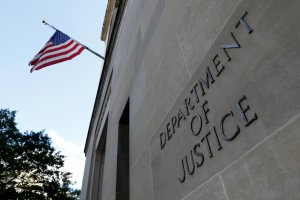
The U.S. Department of Justice said Takeshi Ebisawa was sentenced by U.S. District Judge Colleen McMahon in the Southern District of New York after admitting to six criminal counts.
Prosecutors said the case stemmed from a multi-year undercover investigation targeting an international network involved in transactions involving narcotics, weapons and nuclear materials.
The Investigation
According to the Justice Department, the investigation examined activity between approximately 2019 and Ebisawa’s arrest on April 4, 2022, involving an international network of associates operating across Japan, Thailand, Burma (Myanmar), Sri Lanka and the United States, among other locations.
During the investigation, a Drug Enforcement Administration (DEA) undercover agent posed as a narcotics and weapons trafficker. Ebisawa introduced the agent to members of the network in order to arrange potential criminal transactions.
Authorities said Ebisawa and his associates negotiated four separate sets of transactions with the undercover operative during the investigation.
In one proposed deal, Ebisawa attempted to broker the sale of nuclear materials, initially offering uranium and later proposing plutonium, which he described as more powerful.
The materials were intended for a buyer he believed to be an Iranian general connected to a nuclear weapons programme. In exchange, Ebisawa sought military-grade weapons, including surface-to-air missiles, for an ethnic insurgent group in Burma.
In February 2022, Ebisawa and two co-conspirators met with the undercover operative in Thailand, where one associate displayed samples of the nuclear material.
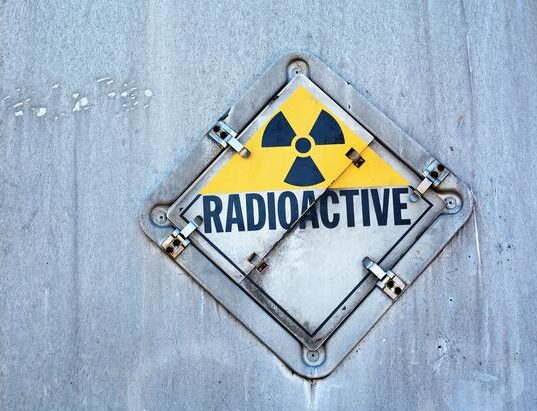
Thai authorities seized the samples and transferred them to U.S. law enforcement. A U.S. nuclear forensic laboratory later determined the materials contained detectable quantities of uranium, thorium and weapons-grade plutonium, according to the Justice Department.
The investigation also uncovered planned narcotics transactions. In one arrangement, Ebisawa sought to broker the sale of methamphetamine and heroin to the undercover operative in exchange for heavy weapons that were described as originating from U.S. military bases in Afghanistan, the DOJ said.
In a separate negotiation, Ebisawa and associates discussed the sale of approximately 500 kilograms of methamphetamine and 500 kilograms of heroin intended for distribution in the New York market.
During 2021, associates provided narcotics samples to the undercover operative in Thailand.
Authorities also identified a money laundering transaction involving $100,000, which the undercover agent represented as narcotics proceeds.
The funds were transferred to U.S. bank accounts controlled by one of Ebisawa’s associates, after which Ebisawa delivered the equivalent of approximately $85,000 in cash in Tokyo, retaining a commission.
The Prosecution
U.S. authorities said the case resulted from a multi-year investigation involving several domestic and international law enforcement agencies.
The Drug Enforcement Administration led the investigation, with assistance from IRS Criminal Investigation and multiple DEA offices operating internationally.
The Justice Department said law enforcement partners in Denmark, Indonesia, Japan and Thailand also supported the investigation.
Prosecutors from the U.S. Attorney’s Office for the Southern District of New York handled the case with assistance from the National Security Division’s Counterterrorism Section.
Legal Exposure And Penalties
Ebisawa pleaded guilty to six criminal counts related to trafficking nuclear materials, narcotics and weapons, as well as participating in a money laundering transaction.
U.S. District Judge Colleen McMahon sentenced him to 20 years’ imprisonment. The court also imposed five years of supervised release.
The Justice Department announcement does not specify the statutory maximum penalties associated with the charges.
Cross-Border Investigation and Enforcement Cooperation
The prosecution reflects a multi-year investigation involving several U.S. agencies and international law enforcement partners.
According to the Justice Department, authorities worked across multiple jurisdictions to investigate transactions involving narcotics, weapons and nuclear materials negotiated through intermediaries operating in different countries.
The case relied heavily on an undercover DEA operation, along with cooperation from authorities in Denmark, Indonesia, Japan and Thailand.
Investigators also used forensic analysis of seized material samples and traced financial transfers routed through U.S. bank accounts as part of the investigation.
The Justice Department said the investigation involved coordination between the DEA’s Special Operations Division, multiple DEA international offices and prosecutors from the U.S. Attorney’s Office for the Southern District of New York, with support from the National Security Division’s Counterterrorism Section.
The DOJ announcement does not indicate whether the prosecution forms part of a broader enforcement initiative.
Following sentencing, Ebisawa will serve the prison term imposed by the court followed by a five-year period of supervised release.
Case Details
Court: U.S. District Court
District: Southern District of New York
Case posture: Defendant sentenced following guilty plea
Lead investigative agencies: Drug Enforcement Administration; IRS Criminal Investigation
DOJ components: U.S. Attorney’s Office for the Southern District of New York; National Security Division Counterterrorism Section; Office of International Affairs
Date of announcement: 3 March 2026