Understand Your Rights. Solve Your Legal Problems


Investment Fund Insolvency & Restructuring in the Cayman Islands — Expert Insights from Campbells
By Mark Goodman, Partner at Campbells (Cayman Islands)
The Cayman Islands remains a key jurisdiction for investment fund insolvency and restructuring, supported by a well-established legal framework, experienced judiciary, and strong cross-border expertise. As an international financial centre, it is frequently selected for complex restructuring and winding-up proceedings involving global stakeholders.
In this interview, Mark Goodman, Partner at Campbells, explores the legal features that underpin the jurisdiction’s reputation, including its approach to cross-border insolvency, evolving restructuring mechanisms, and the impact of wider economic developments on the investment fund market. Drawing on extensive experience in contentious and non-contentious matters, he outlines the practical considerations facing investors, creditors, and advisors navigating complex restructurings.
Below, he discusses how the Cayman framework continues to evolve in response to global economic shifts and complex cross-border restructurings.
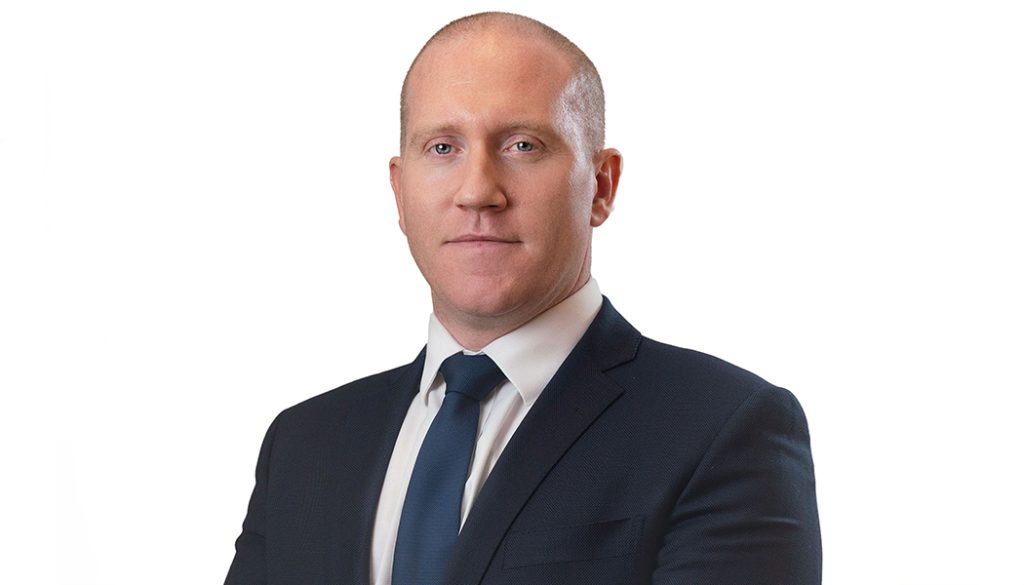
Mark Goodman, Partner at Campbells (Cayman Islands)
What makes the Cayman Islands an attractive jurisdiction for handling insolvency and restructuring cases, particularly for investment funds?
As a leading global financial centre, the Cayman Islands benefits from a stable regulatory regime, a legal system modelled on English law, and an independent judiciary, with final appeals heard by the Judicial Committee of the Privy Council in the UK. Its statutory framework is supported by well-established common law principles drawn from both local decisions and wider Commonwealth jurisprudence.
The jurisdiction’s insolvency and restructuring regime is particularly well developed. The Grand Court’s dedicated Financial Services Division ensures that cases are overseen by judges with relevant commercial experience, providing continuity and specialist oversight throughout proceedings.
Cayman law is generally regarded as creditor-friendly, with creditors typically entitled to a winding-up order where insolvency is established. At the same time, the framework also includes debtor-protection mechanisms that allow companies to seek breathing space while proposing restructuring solutions or compromises with stakeholders.
The court has become increasingly experienced in distinguishing cases where restructuring offers greater value from those where liquidation is the better outcome for creditors or shareholders. Insolvency practitioners are regulated under the Insolvency Practitioners Regulation Act 2019, which requires professional qualifications, experience, and independent oversight.
Taken together, these elements create an environment in which insolvency and restructuring matters are handled by experienced professionals before a specialised and independent judiciary, supported by a mature body of statutory and case law.
How does Cayman Islands law address the unique complexities of cross-border insolvency, and what benefits does this provide to international clients?
The Cayman Islands has not adopted the UNCITRAL Model Law on Cross-Border Insolvency but has developed its own mechanisms for the management of cross-border cases.
Foreign-appointed officeholders over a Cayman company are therefore not able to seek recognition of their appointment in the Cayman Islands through the mechanisms included in the UNCITRAL Model Law. Instead, a foreign-appointed officeholder must seek an appointment in Cayman jointly with a locally resident, licensed insolvency practitioner.
Appointees of a foreign company with interests in the Cayman Islands can seek recognition of their appointment pursuant to section 241 of the Companies Act (2023 Revision). The Grand Court also applies common law principles of comity in providing assistance to foreign-appointed liquidators short of recognition.
Order 21 of the Companies Winding-up Rules 2018 imposes a positive duty upon a Cayman liquidator to consider entering into an international protocol with any foreign counterpart, aimed at harmonising the management of the liquidation to avoid wasteful and expensive duplication of effort.
Between the courts themselves, the Grand Court has previously recognised a positive duty to assist the foreign main insolvency or restructuring proceeding, and in Practice Direction 1 of 2018, approved the American Law Institute/International Insolvency Institute (“ALI/III”) and the Judicial Insolvency Network (“JIN”) Guidelines for court-to-court communications as being suitable for use in cross-border insolvency and restructuring cases.
In what ways have recent economic shifts impacted the insolvency and restructuring landscape for investment funds in the Cayman Islands?
The Cayman Islands occupies a unique position as an insolvency and restructuring jurisdiction in that most of the well-over 100,000 locally incorporated companies conduct business activities mostly or exclusively outside of the Cayman Islands.
As a result, Cayman companies have operations and interests which span the globe and cover every industry sector, making the Cayman Islands less susceptible to localised trends or economic shifts.
Global macro-economic or geopolitical events, such as the Global Financial Crisis or the COVID-19 pandemic, had a pronounced effect on the local insolvency and restructuring market, but for the most part, the number of insolvency and restructuring filings year-on-year shows a steady upward trend.
Jurisdictionally, there has been a significant increase over the past decade in disputes and insolvency cases emanating from the PRC. The Russian invasion of Ukraine has resulted in a dramatic reduction in Russian-exposed disputes and insolvency cases due to economic sanctions.
In terms of industry sectors, the mainstream adoption of cryptocurrency as an investment instrument and the increased interest of institutional investors in digital assets has seen significant growth in crypto and fintech-related investment funds.
As a consequence, the Cayman Islands has seen its fair share of the global rise in crypto and fintech-related disputes and insolvencies. The continued evolution of the digital assets landscape suggests that this trend is set to continue.
What are the primary legal considerations for clients involved in restructuring or insolvency cases in the Cayman Islands, and how can they navigate these effectively?
The primary considerations for stakeholders in restructuring or insolvency cases tend to be essentially the same, as in both cases stakeholders hope to maximise their return in the shortest possible time. In a restructuring case, the objective tends to be to stabilise the company so that it can continue as a going concern and return greater value over time. Stakeholders in a restructuring case might typically expect to be offered shares in exchange for debt, or for notes to be extended and amended.
A liquidation of an insolvent company usually involves identifying that the subject company has no viable future as a going concern, and the objective becomes to maximise the return by realising assets as advantageously as possible and looking to other sources of potential recovery, which would generally involve litigation.
Since the two strategies are generally mutually exclusive, it is important to identify the difference as early as possible and then be inventive and flexible about value-creating solutions.
How does litigation related to investment fund restructuring differ in the Cayman Islands compared to other jurisdictions?
Restructuring in the Cayman Islands has its roots firmly in English law, and the primary tool for restructuring remains the scheme of arrangement, which is a form of statutory contract that is very flexible in its application and allows a majority to bind a dissenting minority, providing that requisite majorities in number and value support the scheme at class meetings and the court adjudicates the scheme to be fair.
To successfully challenge a scheme of arrangement, the two main strategies for dissenters are building a blocking position to vote down the scheme of arrangement at the class meetings or, failing that, challenging the scheme of arrangement on grounds of fairness.
A recent development which differentiates Cayman as a restructuring jurisdiction is the introduction of the Restructuring Officer regime. Formerly, it was necessary for a company (or a so-called “friendly creditor”) to petition for the liquidation of the company in order for the company to apply to appoint provisional liquidators on a “light-touch” basis so as to invoke the statutory moratorium on claims while the company proposed a compromise or arrangement to its creditors.
While this was a creative application of existing statutory provisions, it had the downside that a winding-up petition must first be presented, and thereafter the company was under the control of provisional liquidators (however “light-touch”) and by convention would add the words “in provisional liquidation” after its name.
This taint of insolvency discouraged some companies from using the process to the ultimate detriment of their stakeholders, but the new Restructuring Officer regime does not require a winding-up petition to be presented or the appointment of provisional liquidators, so it is a helpful evolution of the practice.
For clients looking to protect their investments, what proactive measures can they take in light of current insolvency and restructuring trends?
Investors should be wary of any attempt to vary or limit their recourse in the event of insolvency. Non-petition clauses have become very common and will be upheld by the Grand Court.
Articles of association and other constitutional documents might also include other restrictions, such as onerous limitation periods, indemnities for directors and officers, and other restrictions that may make recoveries difficult in the event of economic failure.
Mark Goodman is a Partner in the Litigation, Insolvency & Restructuring Group at Campbells, where he focuses on insolvency, restructuring, and investment fund litigation across complex cross-border matters. He regularly advises and appears before the Cayman Islands courts on behalf of provisional and official liquidators, creditors, shareholders, directors, and other professional stakeholders in pre- and post-liquidation disputes, with a particular emphasis on distressed investment funds.
His practice includes acting on high-profile restructuring and enforcement matters involving significant international liabilities, including restructurings and bond enforcement claims across Asia and offshore jurisdictions. Mark is also an accredited mediator and frequently contributes to industry discussion through publications, seminars, and conference speaking engagements on insolvency and restructuring developments.
In addition to his practice, he serves as a delegate to the United Nations Commission on International Trade Law (UNCITRAL) Working Group V, which focuses on insolvency law reform and harmonisation.